When I got the WhatsApp message, I knew immediately that something wasn’t right. The message claimed to be from a church pastor in America. He wrote that he was emailing for help in the form of donations to assist with running the church and helping the community.
His story didn’t add up, so I decided to call him, which I am very certain he was not prepared for. Sure enough, the voice that answered the phone had a heavy African accent. I introduced myself to him and told him firmly that I was aware I was getting scammed. However, you can imagine his shock when instead of hanging up on him immediately, I told him that I insisted upon sending the money to him anyway anyway. We agreed that I would wire $200 to the scammer via Western Union, with one condition: I wished for him to use just half the money for whatever his actual cause behind the scam was, as long as the remaining $100 was used for charity. I didn’t specify exactly how I wanted him to use the money, as long as it was serving to pay it forward and give back to the community. He promised to follow up with his end of the bargain by sending proof of what he had used the money for, and after our phone call had ended, I did what I had promised to do.
After I had transferred the money, days went by without a message from the scammer, but I didn’t let myself entertain the thought that he might have kept all of the money for himself. I believe deep down that there is good in everyone – and I knew there was good in this man. It is especially important to me in trying times to make a real effort to treat everybody like they are worthwhile, and to help others when I can.
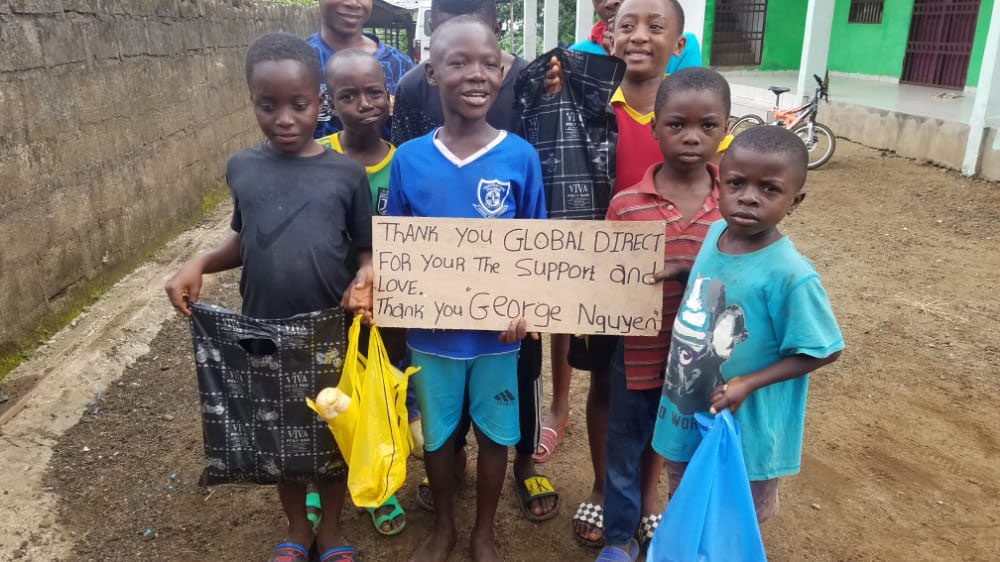
When the message from the scammer arrived, I knew without a doubt I had made the right decision. We had a second phone call to discuss how the money had been used. The scammer – who introduced himself to me by his real name, Jordan Mokombe – had used half the money to buy food for local children, just as he had promised. He thanked me profusely for the opportunity I had given him.